



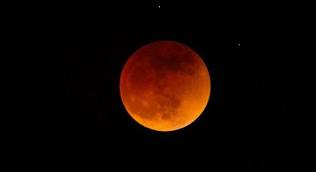
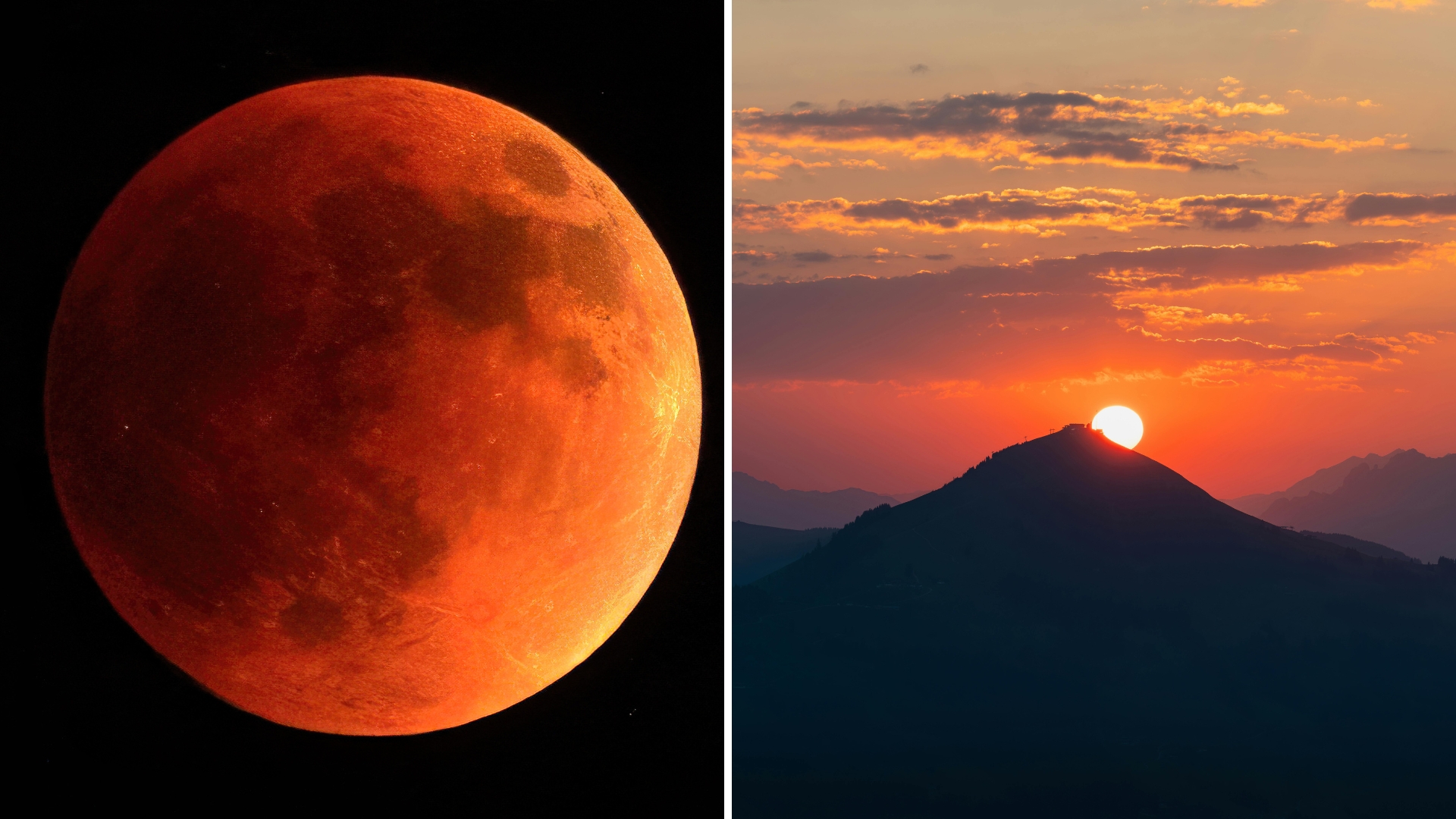
A Lunar Eclipse is one of the most spectacular astronomical events visible from Earth. Unlike solar eclipses, it requires no telescope or protective eyewear. Anyone under a clear night sky can witness this cosmic alignment. During a Total Lunar Eclipse, the Moon turns a dramatic red-orange color — commonly known as a “Blood Moon.”
What Is a Lunar Eclipse?
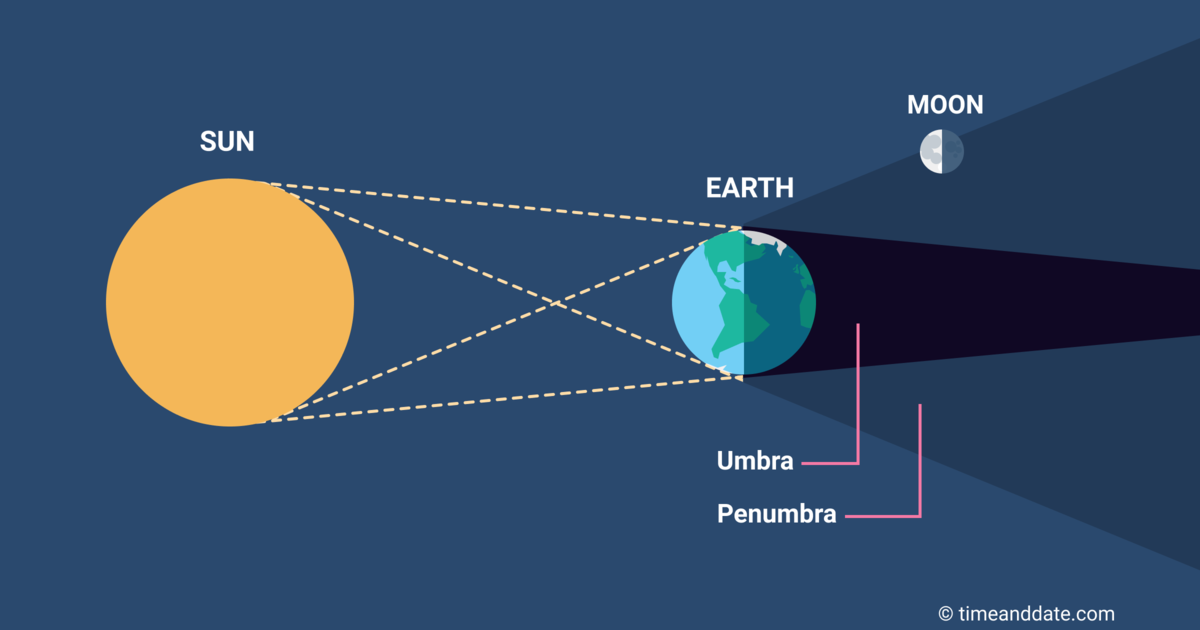

A lunar eclipse occurs when the Earth moves directly between the Sun and the Moon, casting its shadow on the Moon. This alignment is called syzygy — when three celestial bodies line up in a straight line.
Key Conditions:
- It occurs only during a Full Moon
- The Sun, Earth, and Moon must be nearly perfectly aligned.
- The Moon must pass through Earth’s shadow.
However, lunar eclipses don’t happen every full moon because the Moon’s orbit is slightly tilted (about 5°) relative to Earth’s orbit around the Sun. Only when the alignment occurs near the orbital nodes does an eclipse take place.
Types of Lunar Eclipses
Total Lunar Eclipse
The Moon passes completely into Earth’s umbra (the darkest part of the shadow).
This is when the Moon turns red.
Partial Lunar Eclipse
Only a portion of the Moon enters the umbra, making part of it appear dark.
Penumbral Lunar Eclipse
The Moon passes through Earth’s penumbra (outer shadow).
The dimming is subtle and often difficult to notice.
Why Does the Moon Turn Red? (The Science Explained)
4
If Earth blocks sunlight, why doesn’t the Moon turn completely black?
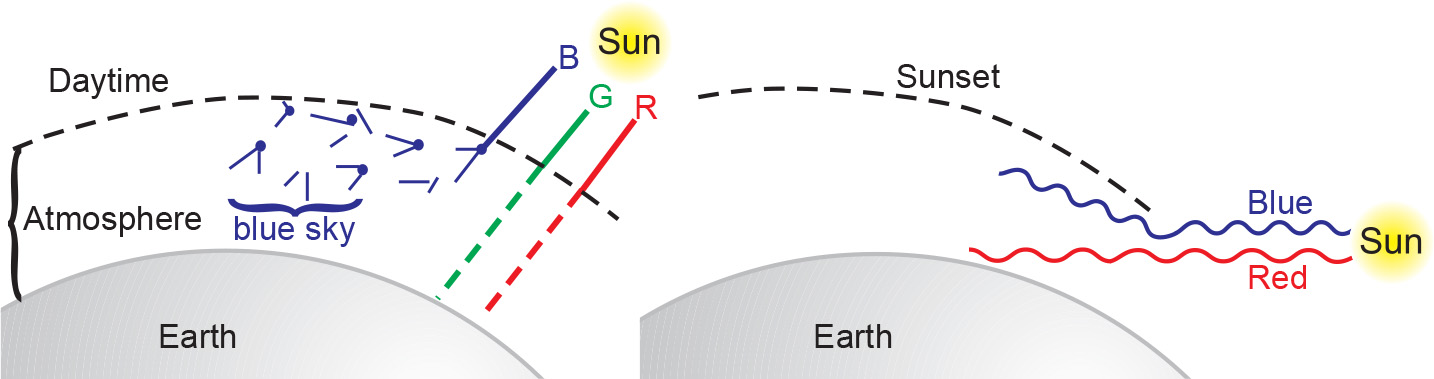
The answer lies in Earth’s atmosphere and a process called Rayleigh Scattering.
When sunlight passes through Earth’s atmosphere:
- Shorter wavelengths (blue and violet light) scatter in all directions.
- Longer wavelengths (red and orange light) bend and pass through the atmosphere.
- This red light is refracted (bent) into Earth’s shadow and reaches the Moon.
Essentially, during a total lunar eclipse, the Moon is illuminated by all the sunrises and sunsets happening around Earth at that moment. That reddish glow you see is the combined filtered light from our planet’s atmosphere.
The exact shade of red depends on:
- Atmospheric dust
- Pollution levels
- Volcanic eruptions
- Cloud cover
More particles in the atmosphere = deeper red color.
Phases of a Total Lunar Eclipse
A total lunar eclipse happens gradually and can last several hours:
- Penumbral Phase Begins – Slight dimming starts.
- Partial Eclipse Begins – Dark shadow appears on one side.
- Totality Begins – Entire Moon turns red.
- Maximum Eclipse – Deepest red color.
- Totality Ends – Moon begins to brighten.
- Partial Eclipse Ends
- Penumbral Phase Ends
Totality alone can last up to 1 hour and 40 minutes, making lunar eclipses longer than solar eclipses.
Why Lunar Eclipses Are Special
- Safe to watch with the naked eye.
- Visible from the entire night side of Earth.
- Longer duration compared to solar eclipses.
- A powerful reminder of cosmic precision and celestial mechanics.
Ancient civilizations often viewed lunar eclipses as omens or supernatural events. Today, we understand the precise orbital mechanics behind them — yet their beauty remains just as captivating.
Final Thoughts
A lunar eclipse is not just a visual wonder; it is a stunning demonstration of gravitational harmony between the Sun, Earth, and Moon. The transformation of the Moon into a glowing red sphere — the famous Blood Moon — reminds us how Earth’s atmosphere plays a role even in events happening 384,400 km away.
The next time you witness a lunar eclipse, remember: you are watching sunlight filtered through Earth’s atmosphere, painted across the surface of our natural satellite in cosmic artistry.